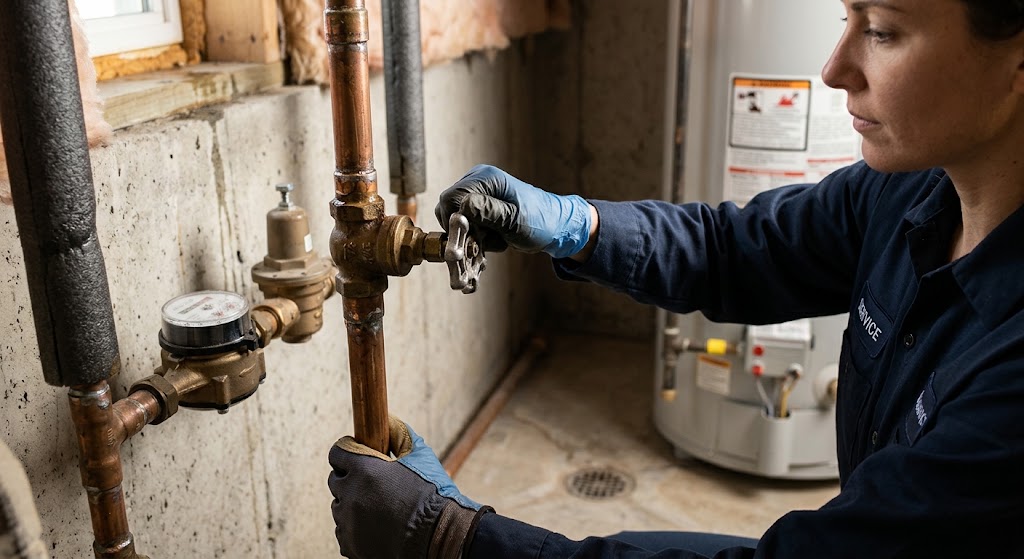
Restoring hot water reliability, resolving thermostat issues, extinguishing pilot failures, and replacing corroded sacrificial anodes across Kenosha residences.
Comprehensive Water Heater Repair & Troubleshooting in Kenosha
Reliable domestic hot water is indispensable, particularly during Wisconsin's bitter winter freeze. In Kenosha, municipal groundwater hardness minerals and continuous thermal stress take a heavy toll on traditional gas and electric storage tank heaters.
Common Water Heater Symptoms We Diagnose
No Hot Water: Tripped high-temperature reset switches, burned-out electric heating elements, faulty gas control valves, or defective thermocouple sensors.
Inadequate or Luke-Warm Water: Snapped dip tubes allowing incoming cold water to dilute hot water near the top discharge nipple, or excessive sediment displacing water volume.
Popping or Rumbling Sounds: Heavy mineral scale trapping pockets of steam against the tank bottom floor, creating kettle-like boiling noises during burner firing cycles.
External Moisture or Tank Leaks: Distinguishing condensation or leaking temperature & pressure (T&P) relief valves from catastrophic internal tank shell corrosion.
Repair vs. Replacement Evaluation
Most water heater tanks feature a manufacturer design life of 8 to 12 years. If your unit is under 8 years old and the internal tank vessel is watertight, replacing electrical components, thermostats, or pressure relief valves is typically the most cost-effective path. If the tank vessel itself is weeping rust-colored water, full replacement is necessary to prevent basement flooding.
Kenosha Local Housing & Infrastructure Context
Kenosha features historic lakeshore bungalows, mid-century brick homes in Allendale and Library Park, alongside rapidly growing western subdivisions near I-94. Lake Michigan's heavy freeze-thaw cycles and seasonal moisture fluctuations place substantial mechanical stress on foundation-level drain connections and private sanitary sewer laterals.
Source: Kenosha County Property & Housing Records • Wisconsin Municipal Guidelines
What You Can Expect from Our Dispatched Plumbers
Thorough On-Site Diagnostics: Visual, acoustic, or camera inspections that diagnose root causes rather than temporary symptoms.
Clear, Upfront Repair Options: Detailed explanations of proposed work, equipment specifications, and transparent repair timelines.
Dissolved calcium and magnesium precipitate out of municipal water when heated, creating an insulating layer of mineral sediment at the base of the tank. In electric heaters, this covers the lower element causing premature burnout; in gas units, it overheats the bottom steel plate, accelerating metal fatigue and tank failure.
The sacrificial anode rod (made of magnesium or aluminum) attracts galvanic corrosion away from the water heater's steel tank walls. Once this rod fully corrodes away, corrosive water attacks the steel tank directly. Inspecting and replacing the anode rod every 3 to 5 years dramatically extends water heater service life.